
VA claim mistakes are not always about filling out a form incorrectly. Sometimes the challenge is that important medical information is difficult to locate, symptoms are not clearly described, or the reason for an unfavorable decision has not been fully understood.
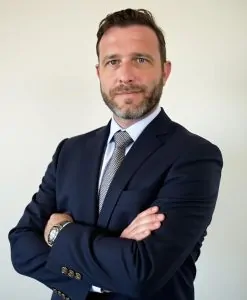
In this conversation, Leah Bucholz, founder and CEO of Prestige Veteran Medical Consulting, speaks with Ray Herrera, Veteran Service Officer for Wilson County, Texas, about recurring problems he encounters when helping veterans navigate the claims process.
Their discussion focuses on relevant evidence, personal statements, decision letters, and preparation. It also highlights an important distinction: medical professionals evaluate medical questions, while accredited representatives provide claim-specific guidance.

Table of Contents
Understanding What the Evidence Needs to Explain
When Leah asks Ray to identify a major mistake veterans make, he begins with understanding the criteria relevant to the condition being discussed.
His point is that having a diagnosis, understanding how symptoms affect daily life, and understanding the questions involved in a claim are related – but they are not interchangeable.
A medical record may clearly identify a condition without fully explaining its history, functional effects, or possible relationship to military service. Likewise, a veteran may describe significant symptoms without realizing that the clinical record contains a different description.
Near the end of the interview, Ray returns to three broad questions: what relevant history exists, what condition is currently documented, and what evidence addresses the proposed relationship to service.
These are starting points for understanding the record, not a substitute for reviewing the requirements of an individual claim. VA’s evidence guidance distinguishes among different claim types, and an accredited representative can help explain which requirements apply.
From PVMC’s medical perspective, the central task is to understand what the records actually show and which medical questions remain unanswered.
Evidence Quality Is Not the Same as Page Count
Ray describes two problems he encounters: too little relevant information and large amounts of information that do not clearly address the issue under review.
He uses the example of a diagnosis buried inside a thousand pages of records. His emphasis is on making important information easier to identify rather than assuming that a larger submission is automatically more persuasive.
That distinction matters. A clear diagnosis, a consistent medical history, and a well-explained relationship between the evidence and the medical question may be more useful than a large collection of unrelated documents.
However, the interview’s example of providing a key diagnosis page should not be interpreted as a universal instruction to submit only one page or leave out relevant records. VA’s Fully Developed Claims guidance, for example, calls for all private medical records related to the claimed condition – not only a selected favorable excerpt.
The goal is clarity without losing relevant context.
A record that discusses another injury, an alternative explanation, or a change in symptoms may still be important. Organizing evidence should make the medical history easier to understand, not make it appear simpler or more favorable than it actually is.
Understanding the Decision, Not Just the Outcome
An unfavorable decision can be frustrating, particularly when a veteran believes the necessary evidence was already provided.
Ray explains that interpreting a decision letter can be difficult even for people with professional experience outside the VA system. The word “denied” communicates the outcome, but it does not explain the entire issue.
VA decision notices are required to include information such as the issues decided, a summary of the evidence considered, favorable findings, and – when a benefit is denied – the elements that were not satisfied.
In the interview, Ray describes helping veterans understand the different parts of the decision rather than focusing only on its conclusion.
For example, a veteran may believe the disagreement concerns whether a diagnosis exists. A closer review may reveal a different question about the medical relationship, the evidence considered, or the explanation in an examination report.
Those distinctions matter because different problems require different kinds of clarification.
The article cannot determine which issue applies to a particular veteran. That requires review of the actual decision and supporting record by the appropriate professional.
An Unlisted Report Does Not Automatically Mean It Was Ignored
One of the most useful exchanges in the interview concerns the evidence section of a decision letter.
Leah explains that, when a veteran contacts her after an unfavorable decision involving a medical opinion she provided, she may look to see whether that report appears in the evidence section.
She also makes an important qualification:
Not seeing the report listed does not necessarily mean it was absent from the file or never considered.
The conversation discusses several possibilities. A document may have been described under a broader label, included as correspondence, or recorded in a way that is not immediately recognizable. There may also be a submission or processing question that needs clarification.
These are possibilities—not conclusions that can be reached from the evidence list alone.
Leah’s response is to identify the question and direct the veteran back to their VSO or other accredited representative. She does not treat an unclear listing as proof of a particular procedural error or tell the veteran which review option to pursue.
This is an important boundary: noticing a documentation question is different from determining its legal significance.
Why Personal Statements Matter
Ray repeatedly emphasizes the value of personal statements because veterans can describe aspects of their symptoms and daily limitations that may not be fully captured during a brief appointment.
VA recognizes lay evidence, including written statements from veterans and people who know about their condition or relevant events, and reviews it alongside other evidence.
A personal account may help explain how often a symptom occurs, what happens during an episode, or how daily activities have changed.
In the interview, Ray’s concern is that something discussed verbally may not always be documented as the veteran intended. A written statement can provide another account of the veteran’s reported experience.
That does not make every statement conclusive or guarantee that it will receive a particular weight. Ray is describing why he encourages statements in his work—not establishing a universal requirement that every claim must contain the same document.
The medical and personal accounts also serve different functions. A veteran can describe what they experience. A qualified clinician evaluates diagnoses, medical findings, and medical relationships within their professional scope.
Both kinds of information may contribute to a clearer understanding of the history.
When an Examination Report Does Not Match the Reported Symptoms
Leah uses headaches as an example of why accurate symptom descriptions matter.
A veteran may report several headaches each month, while an examination report records a different frequency. That discrepancy can create confusion about what was reported and what the examiner documented.
The interview discusses personal statements and headache logs as possible sources of additional detail about the veteran’s reported experience.
From a medical-review perspective, the important questions include what timeframe each account describes, whether symptoms changed, and whether the descriptions are actually inconsistent.
A symptom log or personal statement is not automatically definitive. It needs to be understood alongside the medical history and other available information.
The goal is an accurate account—not a more dramatic one.
Where there is a disagreement about an examination report, an accredited representative can help the veteran understand its significance within the claim. Medical professionals can address the clinical content without choosing the veteran’s legal or procedural response.
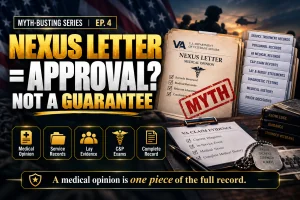
Why Another Nexus Letter Is Not Always the Next Step
Another practical point arises when Leah describes veterans requesting a new medical opinion after receiving an unfavorable decision.
Her example shows why it is important to understand the issue before assuming that another letter is the answer.
If there is uncertainty about whether an existing report was included, how it was labeled, or what the decision says about it, a second opinion does not automatically resolve that uncertainty.
The possible questions are different:
- Was the existing medical opinion available and identifiable in the record?
- Does it adequately explain the diagnosis, history, and medical reasoning?
- Is the disagreement primarily medical, or does it involve a procedural or legal question?
A medical provider may clarify the reasoning in their report or address a medical question. An accredited representative can review the decision and advise on claim-specific next steps.
Another document is useful only when it addresses an actual need.
The interview’s broader message is to understand what the record contains and what remains unclear, rather than automatically collecting more paperwork.
Preparation, Submission Timing, and Intent to File
Ray describes preparation as an important part of his work with veterans. He says that fragmented submissions, unrelated information, and multiple issues arriving at different times can make a case harder to organize.
That is his practical observation, not a universal rule that veterans should delay submitting relevant evidence.
VA allows additional evidence in appropriate circumstances. Its published guidance also explains that submitting additional evidence after a fully developed claim changes the processing route to a standard claim. The timing and consequences therefore depend on the type and stage of the claim.
Ray also discusses an intent to file as part of preparation.
VA describes an intent to file as establishing a potential effective date for certain benefits. To preserve that potential earlier date, the completed claim generally needs to be submitted within one year. An intent to file does not itself establish entitlement to benefits.
That deadline should not be treated casually. Allowing an intent to file to expire may mean losing the potential earlier date associated with it. A later intent to file should not be assumed to restore the earlier date.
For an individual veteran, questions about submission timing, pending matters, review options, and effective dates belong with an accredited representative.
The medical takeaway is narrower: relevant records, accurate symptom descriptions, and a clear history can make the medical issues easier to understand.
What an Accredited Representative Can Help Clarify
Throughout the conversation, Ray and Leah return to the importance of working with the right professional.
An accredited attorney, claims agent, or Veterans Service Organization representative can help with a benefits claim or decision review. VA states that an accredited VSO representative’s services on VA benefit claims are free.
Ray also discusses reviewing electronic claim records through the Veterans Benefits Management System, or VBMS.
Access to these records is controlled. Appropriately authorized accredited representatives may be able to review a represented veteran’s electronic file, subject to VA’s access and representation requirements. This is not unrestricted access for anyone using the title “VSO.”
In the interview, that access is relevant to questions about C&P examinations, document labels, and what information appears in the file.
Leah’s medical role is different. She can review medical records, evaluate clinical reasoning, and explain what her opinion does or does not address. She does not select an appeal route, determine an effective date, or advise a veteran to pursue a particular legal argument.
Ray’s closing message is to build a relationship with a local VSO and learn what assistance that office can provide.
The purpose is not to guarantee a result. It is to help veterans understand the process and obtain the appropriate kind of guidance.
Final Thoughts
The recurring lesson in this interview is that common VA claim mistakes often involve misunderstanding the evidence – not simply failing to collect enough documents.
A large file is not automatically a clear file. A diagnosis may not answer every medical question. A decision’s outcome does not explain every reason behind it. And a missing document title in an evidence list does not, by itself, prove that the document was ignored.
Ray emphasizes preparation, relevant records, personal statements, and understanding the decision. Leah emphasizes accurate medical documentation and staying within the medical professional’s role.
The goal is to make the history clear, describe symptoms honestly, understand what the evidence supports, and seek the right professional guidance for questions that remain.
Also Read: Free VA Claim Guidance: What Veterans Should Know About Working With a VSO
At Prestige Veteran Medical Consulting, a veteran-owned company, we specialize in Independent Medical Opinions (IMOs) known as Nexus letters.
Our purpose is to empower YOU, the veteran, to take charge of your medical evidence and provide you with valuable educational tools and research to guide you on your journey.
Understanding the unique challenges veterans face, our commitment lies in delivering exceptional service and support.
Leveraging an extensive network of licensed independent medical professionals, all well-versed in the medical professional aspects of the VA claims process, we review the necessary medical evidence to incorporate in our reports related to your VA Disability Claim.
Prestige Veteran Medical Consulting is not a law firm, accredited claims agent, or affiliated with the Veterans Administration or Veterans Services Organizations. However, we are happy to discuss your case with your accredited VA legal professional.