
Navigating the world of VA disability claims can feel overwhelming, especially when it comes to complex medical conditions like Chronic Obstructive Pulmonary Disease (COPD). This guide aims to demystify the VA disability process for veterans living with COPD by shedding light on the medical facts, eligibility criteria, and strategies for achieving a successful claim.
If you’re a veteran experiencing chronic cough, shortness of breath, chest tightness, or fatigue—especially after exposure to burn pits, desert dust, or fuel fumes—this comprehensive article is for you.

What Is COPD?
Chronic Obstructive Pulmonary Disease (COPD) is a progressive lung disease that causes long-term breathing difficulties. It’s not a single condition but an umbrella term that includes:
- Chronic bronchitis
- Emphysema
- Refractory (non-reversible) asthma
- A combination of the above
Common symptoms of COPD include:
- Chronic cough
- Shortness of breath (especially during physical activity)
- Wheezing
- Excess mucus production
- Chest tightness
- Fatigue
COPD is not curable, but it can be managed. Unfortunately, in many cases, particularly among veterans, the disease progresses over time—especially if it goes untreated or is misdiagnosed in its early stages.
COPD and Veterans: Understanding the Connection
Many veterans who never smoked may still develop COPD. This is not a coincidence. Military service often involves exposure to environmental hazards that are now known to increase the risk of developing chronic respiratory conditions.
Types of VA Service Connection for COPD
To receive VA disability benefits for COPD, veterans must demonstrate that their condition is connected to military service. There are several ways to do this:
1. Direct Service Connection
If you were diagnosed with COPD while still on active duty or shortly after discharge, your claim may be relatively straightforward. Medical records from your service period are crucial in this scenario.
2. Secondary Service Connection
If your COPD was caused or worsened by another service-connected condition, you might qualify under this category. For example, PTSD leading to smoking as a coping mechanism can be an indirect link to developing COPD. Similarly, COPD that contributes to or worsens conditions like sleep apnea or heart disease could also be considered.
3. Presumptive Service Connection
Since 2021, the VA has recognized certain exposures—especially to particulate matter in regions like Southwest Asia and Afghanistan—as presumptively linked to respiratory illnesses. This means that if you served in these regions and developed COPD, the burden of proof may be significantly reduced.
Smoking, Mental Health, and COPD
While smoking is the leading cause of COPD, many veterans begin smoking as a coping mechanism for untreated or under-treated mental health issues like PTSD or anxiety. The VA may consider this when evaluating your claim—especially if medical documentation shows that smoking began or increased as a result of a mental health condition linked to your service.
For instance, if your PTSD led to heavy smoking as a way to manage symptoms, and that smoking contributed to COPD, the COPD might be considered service-connected as a secondary condition. Though not guaranteed, it’s a pathway worth exploring with your medical provider and VA representative.
How the VA Rates COPD
The VA uses 38 CFR § 4.97 Diagnostic Code 6604 to rate COPD. Ratings are primarily based on pulmonary function tests (PFTs)—particularly the FEV1 (Forced Expiratory Volume in 1 second) and the FVC (Forced Vital Capacity) ratios.
Here’s a quick overview of the rating scale:
- 10% Rating: Mild airflow limitation. FEV1 is 71–80% of predicted value.
- 30% Rating: Moderate impairment. FEV1 is 56–70%.
- 60% Rating: Moderately severe impairment. FEV1 is 40–55%.
- 100% Rating: Severe impairment. FEV1 is less than 40% or if continuous oxygen therapy is required.
Remember, these ratings are based on how well your lungs function, not just on how you feel. This means accurate and current medical tests are crucial to support your claim.
Essential Medical Evidence for Your Claim
To strengthen your VA disability claim for COPD, gather the following documentation:
- Current Diagnosis: Preferably from a pulmonologist or another qualified physician.
- Pulmonary Function Test Results: These should include FEV1, FVC, and other relevant values.
- Exposure Documentation: Service records, deployment orders, or VA burn pit registry enrollment showing potential exposure to toxic substances.
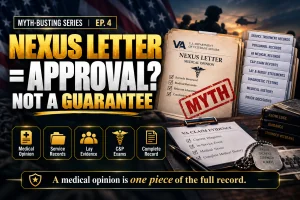
- Nexus Letter (if applicable): A statement from a medical provider linking your military service to your COPD. Even a brief, well-written letter can have a big impact.
If your COPD wasn’t diagnosed until years after service, a nexus letter becomes even more important.
Common Challenges in COPD VA Claims
Veterans may face hurdles when applying for VA disability for COPD. Be aware of these common issues:
- Lack of Pulmonary Function Testing: Without this, it’s hard to determine your disability rating.
- Underestimating Secondary Conditions: COPD may contribute to other health issues such as sleep apnea or heart disease.
- Minimizing the Impact on Daily Life: Describe in detail how COPD affects your ability to work, exercise, or perform basic tasks.
- Assuming Smoking Automatically Disqualifies You: As discussed, if your smoking is tied to a service-connected mental health issue, your claim may still be valid.
What to Do If You’ve Been Denied
Being denied for COPD doesn’t mean the end of the road. If you believe your condition is service-related, consider the following steps:
- Work with an Accredited VA Representative or Attorney
These professionals understand the claims process and can help build a strong case. - Consider Appeals as necessary
- Use VA.gov to Search for Help
The VA website allows you to search for accredited representatives in your area by ZIP code.
Final Thoughts
Chronic Obstructive Pulmonary Disease can severely impact quality of life—and for many veterans, it’s directly linked to their military service. Whether through exposure to hazardous materials, mental health struggles, or a combination of factors, COPD is a condition that should not be ignored or underestimated.
If you’re struggling with symptoms and believe your military service played a role, don’t brush it off. You may be entitled to compensation and treatment through the VA system. The first step is getting informed—and then getting help.
Let your service speak for itself. There are people and resources ready to advocate for you.
Also read: What Are Favorable Findings in VA Disability Claims?
At Prestige Veteran Medical Consulting, a veteran-owned company, we specialize in Independent Medical Opinions (IMOs) known as Nexus letters.
Our purpose is to empower YOU, the veteran, to take charge of your medical evidence and provide you with valuable educational tools and research to guide you on your journey.
Understanding the unique challenges veterans face, our commitment lies in delivering exceptional service and support.
Leveraging an extensive network of licensed independent medical professionals, all well-versed in the medical professional aspects of the VA claims process, we review the necessary medical evidence to incorporate in our reports related to your VA Disability Claim.
Prestige Veteran Medical Consulting is not a law firm, accredited claims agent, or affiliated with the Veterans Administration or Veterans Services Organizations. However, we are happy to discuss your case with your accredited VA legal professional.