
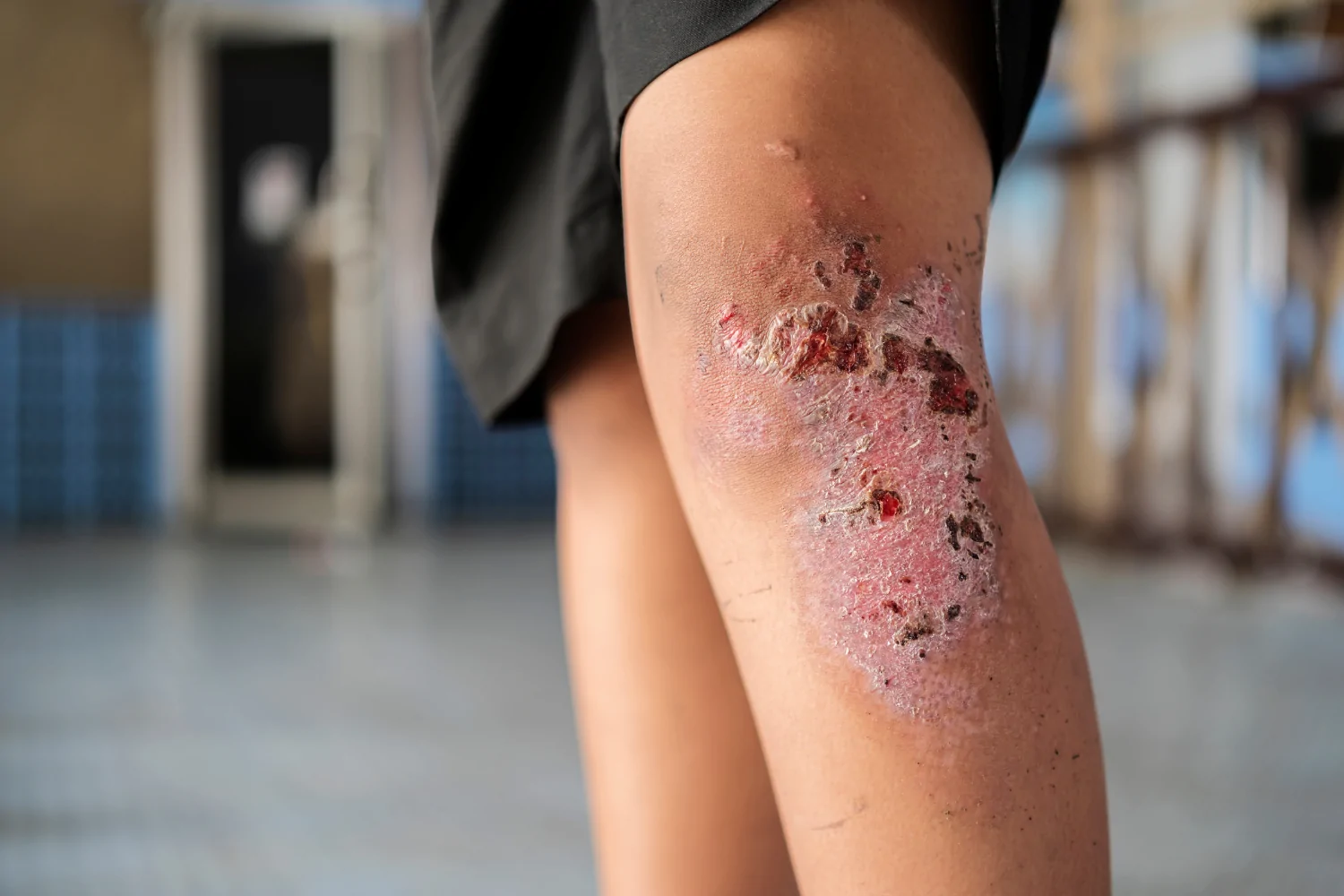
On September 29, 2025, the Department of Veterans Affairs (VA) proposed a rule that may affect how painful scars are evaluated for disability compensation. The proposed change focuses on 38 CFR §4.118, Diagnostic Code 7804, which covers unstable or painful scars.
If finalized, this update would introduce a requirement for “objective evidence of pain”, meaning a veteran’s statement alone may no longer be enough.
The VA estimates over 1.1 million veterans currently receive disability compensation for scars and burns, with more than 96,578 new recipients in the recent data. Given that it is among the most common service-connected conditions, even minor changes in documentation requirements could impact a large number of claims.
This guide explains what the proposed rule can change and what it may not, what “objective evidence” means, and who could be affected. Also, understand the role of a C&P exam and how clearly communicating your symptoms can support your VA rating for scars.
Table of Contents
What the VA Proposed Rule Actually Says
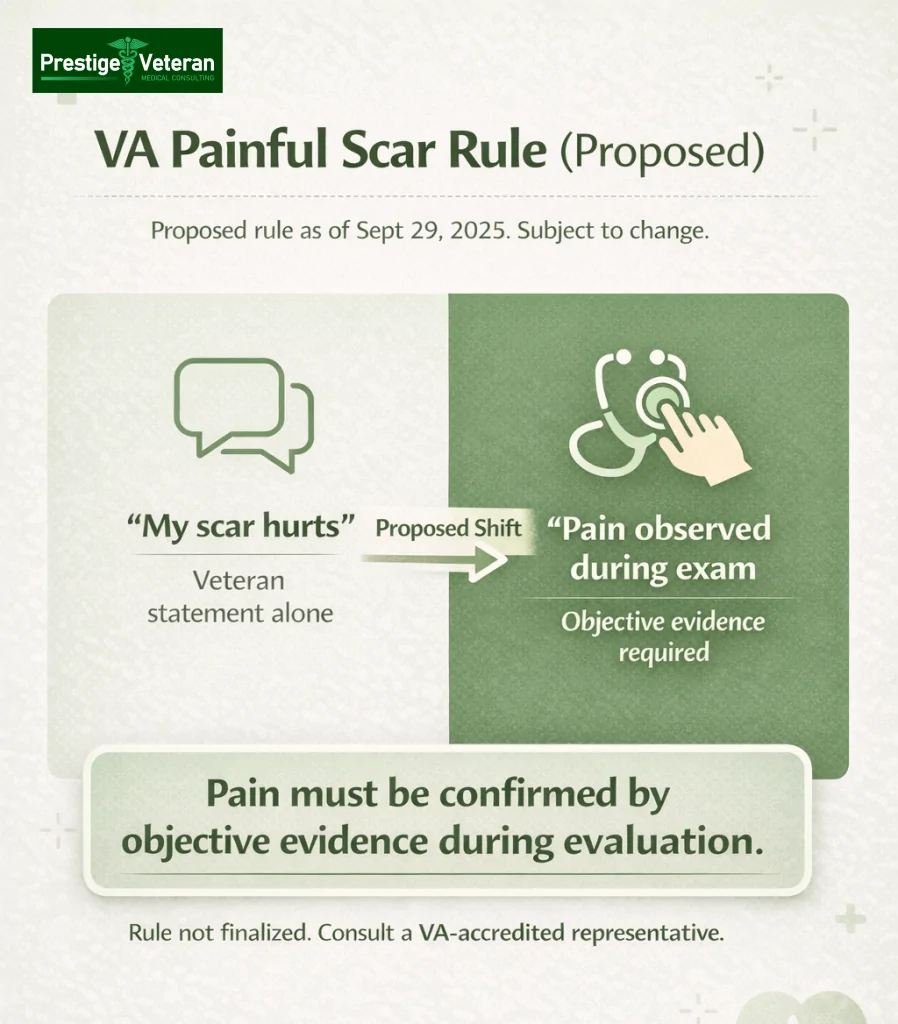
The Department of Veterans Affairs proposed adding a clarifying note to Diagnostic Code 7804, which governs ratings for unstable or painful scars. The proposed language states that pain must be confirmed by objective evidence upon evaluation or demonstration.
For veterans, this means:
- A general statement such as “my scar hurts” may not always be considered sufficient on its own to support a compensable rating.
- Instead, pain must be observed, documented, or confirmed during an evaluation, usually at a Compensation and Pension (C&P) exam or clinical visit.
- The examiner may look for observable signs such as tenderness, pain response, or functional limitation.
The VA says this proposal is intended to clarify a longstanding policy rather than change the rating percentages or reduce compensation.
The proposed rule was published in the Federal Register (RIN 2900-AS37) on September 29, 2025, with public comments accepted through November 28, 2025. As of now, it remains a proposed rule and has not been finalized. Consult a VA-accredited representative for the most current and accurate information.
What “Objective Evidence” Means for Veterans
“Objective evidence” in this context refers to observable confirmation of scar pain during evaluation, not just a veteran’s verbal report. That means the VA is not requiring lab tests or imaging, but may look for physical indicators that support the presence of pain. This usually happens during a hands-on physical exam when the provider inspects and palpates the scar and documents a pain response.
Examples of findings that may be documented as objective evidence of pain include:
- Tenderness when the scar is touched
- Wincing during palpation
- Visible inflammation
- Guarding response
- Limited movement due to pain
- Examiner documenting “pain on palpation”
- Instability (skin breakdown)
- Sensitivity to friction or pressure
Subjective vs. Objective Evidence in Scar Claims
The proposed scar rule change emphasizes that the pain should be demonstrated during evaluation and not just described.
Subjective evidence for a painful scar VA claim would be:
A veteran’s statement, “My scar is painful” or “I feel discomfort”.
Objective evidence may look like:
Examiner presses scar → veteran reacts with tenderness or pain → examiner observes and documents tenderness
Under the proposed rule, the second scenario provides observable findings that may support the presence of a painful scar. If pain is not reproduced or documented during the exam, the scar may be less likely to be considered as painful under DC 7804.
Note: This is a possible effect of the proposal, not a guaranteed outcome in every case.
Why VA Says It’s Making This Proposal for Rule Change
The VA states that the proposed change is intended to improve clarity, consistency, and uniform application of Diagnostic Code 7804 across the system.
- Historically, the 1946 version of DC 7804 described scars as “tender and painful on objective demonstration.”
- The later 2008 version removed wording such as “on examination,” which may have created confusion about whether objective confirmation was still required.
According to the VA, the removal of that language was never meant to eliminate the need for objective evidence, but rather to avoid redundancy as disability evaluations already rely on medical examination findings.
Variation in Applications Over Time
Over time, this ambiguity may have led to inconsistent application of DC 7804 by different examiners. Some examiners accepted credible lay statements as sufficient evidence of pain, while others required documented physical findings.
The VA argues that adding a clarifying note would standardize expectations nationwide and ensure painful scars are rated consistently using the same evidentiary threshold of observable functional impairment.
Concerns Raised Over the Proposal
However, critics believe the clarification may effectively raise the evidentiary bar, even if scar rating percentages stay the same. Veterans whose pain is intermittent, internal, or not easily reproduced during a brief exam may face additional challenges in demonstrating qualifying painful scars.
In practice, this could make documentation during exams more important than in the past.
What Doesn’t Change: VA Rating Criteria for Painful Scars (DC 7804)
Under 38 CFR § 4.118 (Skin Conditions), Diagnostic Code 7804, the VA assigns disability ratings based on the number of painful or unstable scars a veteran has. The rating percentages remain unchanged under the proposed rule.
How VA Assigns Your Scar Rating
- 10% Rating: You have one or two painful or unstable scars
- 20% Rating: You have three or four painful or unstable scars
- 30% Rating: You have five or more painful or unstable scars
An “unstable scar” is one with frequent loss of skin covering over the scar, such as recurring breakdown, ulceration, or reopening. A “painful scar” is one that produces discomfort, tenderness, or pain upon evaluation.
Important Compensation Rule:
If one or more scars are both painful AND unstable, the VA assigns an additional 10% to your disability rating.
Example Scenario:
You have 3 scars total,
- 2 scars are painful only
- 1 scar is both painful and unstable
How the VA Calculates This:
- First, they count all qualifying scars (painful or unstable): You have 3 qualifying scars
- That puts you at: 20% rating (because 3 to 4 scars = 20%)
- Now apply the important rule:
→ One of your scars is both painful and unstable
→ Add an extra +10%
Total Final Rating:
20% (base) + 10% (extra) = 30% VA Rating
Note: This additional 10% is a direct schedular addition and is not calculated using standard VA combined ratings math.
What Determines Your VA Scar Rating
Because Diagnostic Code 7804 relies on documenting which scars are painful and unstable, accurate medical records play an important role. If multiple scars exist but only one is documented as painful, your final VA disability percentage may be lower than expected based on the number of scars present.
Under the proposed rule, a scar may only be counted as “painful” if that pain is confirmed through objective medical evidence during an evaluation. This clarification could affect how many scars qualify for compensation if finalized.
Secondary Conditions Related to Scars
In some cases, scars may cause secondary conditions such as nerve pain (neuropathy), restricted motion due to joint scars, or mental health disorders like anxiety or depression. These additional impairments may qualify for separate or combined ratings.
Who May Be Impacted by the Proposed Change
This proposed change can primarily affect veterans actively seeking compensation for painful scars or higher ratings, especially on the basis of self-reported symptoms.
This proposed change may be relevant in situations such as:
- You are filing a new scar VA disability claim
- You are seeking an increased rating for an existing scar disability
- You are attending a C&P exam where scar pain is evaluated
- You are undergoing a VA re-evaluation of your disability rating
- Your scar pain is documented through personal statements rather than consistent medical records
- You are reporting scar pain during VA medical visits, as these records become a part of your claims file
Scars That May Be Less Easily Observable
Additionally, this proposed rule on VA scar claims could particularly impact veterans whose pain is real, but not always visible. This includes nerve-related scar pain, surgical scars, burn scars, internal scarring, keloid scars, and scars that hurt only with friction or movement. For example, lung burns, internal surgical scarring, or deep tissue nerve damage may produce significant discomfort without obvious external signs.
Veterans whose scars flare intermittently or worsen with specific triggers may also be impacted if symptoms are not demonstrated during the exam.
Example Scenarios for Veteran Scar Evaluations
Scenario 1: Activity-Based Scar Pain Not Reproduced
A former Army infantryman has a 3-inch thigh shrapnel scar. Pain occurs after walking 1–2 hours, with tightness and deep aching. During the C&P exam, palpation shows no visible reaction.
The examiner records “no tenderness.”
Possible result: The scar may not be rated as “painful” under DC 7804 if the exam and other records do not document objective pain, and may be considered as noncompensable.
Scenario 2: Friction-Based Burn Scar (Clearly Observable)
A Marine has a 2-inch chest burn scar causing burning pain with clothing friction and sweating. During the exam, light palpation triggers immediate withdrawal and redness.
The examiner documents “pain on palpation.”
Possible result: 1 painful scar confirmed → would generally support classification of the scar as painful (10% rating) under DC 7804.
Scenario 3: Keloid Neck Scar with Underreported Pain
An Air Force veteran has a raised keloid neck scar causing tightness and sharp pain when turning the head.
During the exam, minimal palpation is done and the veteran describes it as “annoying.”
Possible result: No tenderness or painfulness recorded → may not receive a compensable rating under DC 7804 without objective evidence. In some cases, the neck scar may qualify separately for disfigurement under DC 7800, if applicable.
Note: These scenarios are illustrative examples. Actual VA rating outcomes may vary depending on the veteran’s full medical record, examiner findings, and how symptoms are documented during evaluation.
Understanding the Role of a C&P Exam for Painful Scars
Under the current rules and proposed clarification, the Compensation and Pension (C&P) exam is one of the important moments in a painful scar claim. If greater weight is placed on objective confirmation, the way symptoms are described and documented during the exam could influence how the condition is assessed, if the proposal is finalized.
Here’s how scar-related pain is typically recorded during evaluation:
Description of Symptoms:
You may be asked to describe what the pain feels like, using terms such as burning, stabbing, throbbing, pulling, or sharp sensations to help the examiner understand the scar condition.
Pain Frequency and Flare-Ups:
There may be a discussion about how often the pain occurs, whether it is constant or intermittent, how long it lasts, and whether flare-ups occur. If flare-ups are present, you may be asked what triggers them, how severe they are, and how long they last to help establish a clear pattern of symptoms.
Triggers and Aggravating Factors:
Examiners often look for information about what causes or worsens the pain, such as touch, pressure, clothing friction, movement, or temperature changes.
Physical Examination and Measurements:
During the C&P exam, the examiner typically performs a visual inspection and physical assessment of the scar. This may include measuring its length, width, and total surface area.
The examiner may also palpate the scar to assess tenderness, adherence to underlying tissue, and whether the scar is deep or superficial. If touching the scar causes discomfort, inform the examiner right away so they can properly document the pain response.
Scar Stability and Surface Characteristics:
The examiner may evaluate whether the scar is stable or unstable. An unstable scar is one where the skin frequently breaks down, ulcerates, or loses its covering. Additional observations may include discoloration, abnormal texture, tissue loss, or whether the scar is raised or depressed.
Impact on Movement and Functional Impairment:
The evaluation may include whether the scar affects movement, daily activities, sleep, or work-related tasks to help connect symptoms to real-life limitations. In some cases, a range of motion testing may be performed, especially if the scar is near a joint or an area involved in bending, lifting, or rotation.
Location and Disfigurement:
The location of the scar is also considered. Scars on the head, face, and neck may receive higher ratings when they cause disfigurement, evaluated under Diagnostic Code 7800.
Presence of Related Conditions:
The examiner may also assess whether the scar is linked to underlying conditions like nerve damage, muscle injury, or other residual effects, and separate evaluations may be considered if additional disabilities are identified.
Findings from the exam are typically compared with medical records, treatment history, and lay statements to ensure consistency.
Disability Benefits Questionnaire (DBQ)
Knowing how the VA evaluates your scar claim helps you to prepare, as the examiner will use the Scars/Disfigurement Disability Benefits Questionnaire (DBQ) to document the severity, symptoms, and daily impact of your scar.
The goal of the C&P exam is not to exaggerate symptoms, but to ensure they are observable and documentable. Clear communication and cooperation during the evaluation increase the likelihood that your pain is documented in its true severity and support a compensable rating.
Additional Considerations on Preparing for the Proposed Change
Getting a fair rating for a painful scar often comes down to how clearly your symptoms are documented, before and during the exam. These considerations can help make sure your condition is properly recognized and not overlooked under the proposed rules.
1. Avoid Downplaying Your Pain
Many former service members are used to pushing through discomfort, but downplaying symptoms can lead to weak or incomplete documentation. As proposed changes to VA scar claims emphasize observable confirmation, those who do not clearly communicate or demonstrate symptoms may risk lower ratings even when their scar pain is legitimate. Be honest about what you feel, even if it seems minor or routine to you.
2. Describe the Pain Clearly and Specifically
General statements like “it hurts” may not give VA examiners enough to work with. Consider using descriptive language that reflects your experience.
For example, you can say “it starts hurting after I’ve been sitting or driving for a while” or “there’s a feeling of a quick electric shock when something brushes against it”.
3. Track Symptoms and Their Impact on Your Life
Pain that can be reproduced or observed is likely to carry more weight, if the rule is finalized. Be ready to explain what brings it on or makes it worse. If your pain comes and goes, explain how often flare-ups happen, how long they last, and what activities they limit or prevent.
For example, if your scar stretches when lifting objects, and the pain lasts for several hours with soreness and tightness, that’s helpful to mention. Explain how such flare-ups limit your daily tasks like carrying groceries or doing household chores. This can better connect your scar condition to real-world limitations.
4. Build a Medical Record Before the Exam
Mentioning scar pain during routine medical care may help create a more complete history over time. Bring it up during:
- VA medical visits
- Primary care appointments
- Specialist consultations
If the VA moves forward with a greater focus on “objective evidence,” maintaining repeated notes of tenderness, flare-ups, or functional limits can build a credible timeline for your case.
Moreover, consistent notes in your medical records can strengthen your claim by showing that the issue is persistent, not something reported only once during the C&P exam.
5. Make the Pain Observable During the Exam
If your scar is painful to touch, movement, or pressure, communicate that during the C&P exam. Let the examiner know when something causes discomfort so they can observe and document any response as part of their findings. If the rule change is adopted, these findings may play a more prominent role in how the scars are evaluated.
6. Considerations For Additional Supporting Evidence
Additional evidence can strengthen your case, especially when it reinforces what’s documented in exams. Consider submitting evidence like:
- Clear photographs of the scar showing size, discoloration, or flare-ups
- Treatment or therapy records, such as dermatology visits, steroid injections, physical therapy for restricted movement, silicone gel/sheeting, or pain management medications
- Personal statements describing daily impact
- Lay statements from family, coworkers, or fellow service members noting your visible reactions to pain, activity limitations, or changes in routine
- Clinical notes from private doctors stating, “wincing on palpation over scar site” or “scar appears hypertrophic with localized tenderness”.
7. Consider a DBQ to Strengthen Objective Evidence
A Disability Benefits Questionnaire (DBQ) completed by a private provider can help clearly document your scar in a way the VA already recognizes. These forms record key details like location, measurements, history, whether the scar is painful or unstable, and how it affects function.
The DBQ even includes a checkbox for tenderness on palpation, and when marked after a physical assessment, the VA may consider it as objective evidence of pain, if the proposed rule is adopted.
As regulatory proposals may change before final implementation, veterans should consult a VA-accredited representative, attorney, or claims agent to guide them in their specific situation.
Bottom Line
The proposed VA painful scar rule doesn’t change rating percentages, but it may require objective confirmation of pain. If you’re filing a VA disability claim for painful scars or going to attend a C&P exam, focusing on clear, consistent documentation and avoiding underreporting symptoms during the evaluation can help, if the rule is finalized. Describe exactly how the pain feels, what triggers it, and how it impacts your daily life. Let the examiner observe your response if the scar is tender. Keep credible medical records to help ensure your service-connected scar pain is accurately recognized and rated.
Frequently Asked Questions (FAQs)
Does the VA award 10% for each service-related scar?
No. Under DC 7804, VA disability ratings depend on the total number of painful or unstable scars (10%, 20%, or 30%), not a separate 10% for each scar.
What recent proposed changes may affect VA scar claims?
The VA has proposed a new rule requiring objective evidence of pain (like tenderness on palpation) during evaluation, instead of relying only on the veteran’s personal statement.
Are scars eligible for VA disability compensation?
Yes. Veterans may qualify for disability benefits if scars are painful, unstable, disfiguring, or cause functional limitations.
Can multiple painful scars increase my VA rating?
Yes. Ratings can rise based on the number of qualifying scars:
- 10% for 1–2 scars
- 20% for 3–4 scars
- 30% for 5 or more scars
What if scar pain isn’t recorded during a C&P exam?
If pain isn’t observed or documented during the exam, the scar may not be recognized as painful under DC 7804, possibly leading to a 0% (noncompensable) rating.
Also Read: What to Expect in a Scars C&P Exam
At Prestige Veteran Medical Consulting, a veteran-owned company, we specialize in Independent Medical Opinions (IMOs) known as Nexus letters.
Our purpose is to empower YOU, the veteran, to take charge of your medical evidence and provide you with valuable educational tools and research to guide you on your journey.
Understanding the unique challenges veterans face, our commitment lies in delivering exceptional service and support.
Leveraging an extensive network of licensed independent medical professionals, all well-versed in the medical professional aspects of the VA claims process, we review the necessary medical evidence to incorporate in our reports related to your VA Disability Claim.
Prestige Veteran Medical Consulting is not a law firm, accredited claims agent, or affiliated with the Veterans Administration or Veterans Services Organizations. However, we are happy to discuss your case with your accredited VA legal professional.