

Endometriosis is a condition that affects many women across the United States, including a significant number of women veterans. Despite its prevalence, many veterans remain unaware that the Department of Veterans Affairs (VA) recognizes this debilitating condition as service-connected and provides compensation for it. To obtain the benefits you may qualify for, you must understand how to link endometriosis to your military service and learn how to file a strong VA claim.
Leah Bucholz will explore what endometriosis is, how the VA evaluates it, the types of evidence may support a disability claim, and how primary and secondary service connections may apply. We’ll also address related conditions that can arise from endometriosis and provide guidance on how to support your case with medical literature and nexus statements.

Table of Contents
What Is Endometriosis?
Endometriosis occurs when tissue similar to the lining of the uterus grows outside the uterus. This abnormal tissue growth can result in severe pelvic pain, heavy or irregular menstrual bleeding, infertility, and even problems with the bowel and bladder.
For women who served in the military, particularly in physically demanding or high-stress environments, endometriosis may be triggered or worsened by the unique conditions of service. Despite this, many are unaware that it is a compensable condition under VA disability guidelines.
VA Disability Ratings for Endometriosis
The VA rates endometriosis under Diagnostic Code 7629. There are three possible disability ratings based on severity and the impact on daily functioning:
- 10% Rating: Symptoms are present but are controlled with continuous treatment.
- 30% Rating: Symptoms persist despite treatment and cause significant pain or organ dysfunction.
- 50% Rating: Severe cases with extensive lesions and disabling symptoms that do not respond to treatment.
Understanding these ratings is crucial because they form the basis for how much compensation you may receive.
Building a Strong VA Disability Claim
To file a successful claim for endometriosis, it’s important to consider appropriate medical and service-related evidence. Key elements include:
- Current Diagnosis: A recent diagnosis of endometriosis from a healthcare provider.
- Medical Records: Documentation showing the onset and progression of symptoms, especially during or shortly after military service.
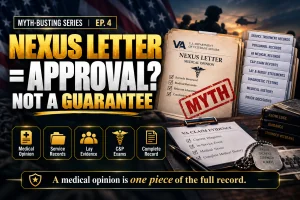
- Nexus Opinion: A medical opinion connecting your condition to your military service. This can come from a VA Compensation & Pension (C&P) examiner, your own treating physician, or another medical professional.
The nexus letter does not need to be lengthy or elaborate, but it must clearly state that it is “at least as likely as not” that your endometriosis is related to your military service.
Functional Impairments as Supporting Evidence
In addition to medical documentation, evidence of how endometriosis affects your life can support your claim. Consider including:
- Records of missed work or training
- Testimonies or statements regarding limitations in daily activities
- Proof of ongoing medical treatments, hospitalizations, or surgeries
All of this contributes to a clearer picture of the condition’s impact and supports a higher disability rating.
Primary vs. Secondary Service Connection
Primary Service Connection
A primary service connection means your endometriosis began or worsened during active duty. Even without an official diagnosis while in uniform, you may still qualify if you can show that your symptoms started during your service and continued afterward. For example, if you experienced chronic pelvic pain or abnormal bleeding while in service, this may serve as a foundation for your claim, especially if your formal diagnosis followed shortly after discharge.
Reservists and National Guard members may face additional challenges, as time spent outside of active duty generally doesn’t count unless they were activated. In such cases, consulting with a VA-accredited claims agent or attorney may be advisable.
Secondary Service Connection
A secondary service connection applies when endometriosis is caused or worsened by another service-connected condition—or vice versa. For instance:
- Mental Health Conditions: Depression, anxiety, or PTSD may exacerbate endometriosis symptoms, or be caused by living with chronic pelvic pain and infertility.
- Surgical Complications: Surgeries performed during active duty, such as a cesarean section, may displace endometrial tissue and trigger the condition.
- Inflammatory Conditions: Other chronic illnesses related to immune or inflammatory responses may intensify symptoms.
If another condition led to the development or worsening of endometriosis, or if endometriosis has led to further health complications, these could be claimed as secondary conditions.
Common Secondary Conditions Linked to Endometriosis
Many veterans do not realize that conditions resulting from or worsened by endometriosis can also be service-connected. These include:
- Chronic Pain Syndromes: Constant pelvic, abdominal, or lower back pain may result in somatic symptom disorder or other chronic pain diagnoses.
- Depression and Anxiety: These are common due to infertility struggles, ongoing pain, or surgical outcomes.
- Bowel and Bladder Disorders: Endometriosis can lead to conditions like interstitial cystitis, irritable bowel syndrome (IBS), and urinary dysfunction.
- Infertility: The leading cause of infertility in women is endometriosis, and when emotional distress accompanies it, it may be rated separately.
- Sexual Dysfunction: Painful intercourse or avoidance due to pelvic pain may also be ratable.
- Surgical Aftereffects: If you’ve undergone hysterectomy, bowel resection, or bladder surgery due to endometriosis, any complications may qualify as additional service-connected disabilities.
Each of these can strengthen your claim, especially when supported by medical records and a nexus opinion tying them to your service or to your primary condition of endometriosis.
Sample Language for Nexus Statements
A strong nexus statement can make a significant difference in the success of your claim. Here are sample phrases your provider might use:
- For Primary Connection:
“It is at least as likely as not that the veteran’s diagnosed endometriosis began during active duty military service. Studies support this opinion, including a 2020 publication in Military Medicine that documents higher rates of endometriosis among servicewomen due to occupational and environmental factors unique to military life.” - For Secondary Conditions:
The veteran’s service-connected endometriosis at least as likely as not caused their diagnosed major depressive disorder, consistent with findings in the Journal of Women’s Health (2018), which shows increased psychiatric comorbidities among women veterans with endometriosis.
These statements may help establish the necessary medical link required by VA for disability benefits.
Endometriosis and VA Disability Claims – Final Thoughts
Endometriosis can be an incredibly painful and life-altering condition. For veterans, the toll it takes can be even greater due to the physically and emotionally demanding nature of military service. Thankfully, the VA does recognize endometriosis as a legitimate service-connected disability—provided you submit adequate evidence.
If you’re unsure how to begin, visit VA.gov and explore their tools and resources for filing a claim. Accredited legal professionals and veteran service organizations (VSOs) are also available to help navigate the process, though their assistance is optional.
By taking the time to understand your rights and properly document your case, you can get the benefits and support you deserve.
Also read: Rotator Cuff Injuries and VA Disability
At Prestige Veteran Medical Consulting, a veteran-owned company, we specialize in Independent Medical Opinions (IMOs) known as Nexus letters.
Our purpose is to empower YOU, the veteran, to take charge of your medical evidence and provide you with valuable educational tools and research to guide you on your journey.
Understanding the unique challenges veterans face, our commitment lies in delivering exceptional service and support.
Leveraging an extensive network of licensed independent medical professionals, all well-versed in the medical professional aspects of the VA claims process, we review the necessary medical evidence to incorporate in our reports related to your VA Disability Claim.
Prestige Veteran Medical Consulting is not a law firm, accredited claims agent, or affiliated with the Veterans Administration or Veterans Services Organizations. However, we are happy to discuss your case with your accredited VA legal professional.