
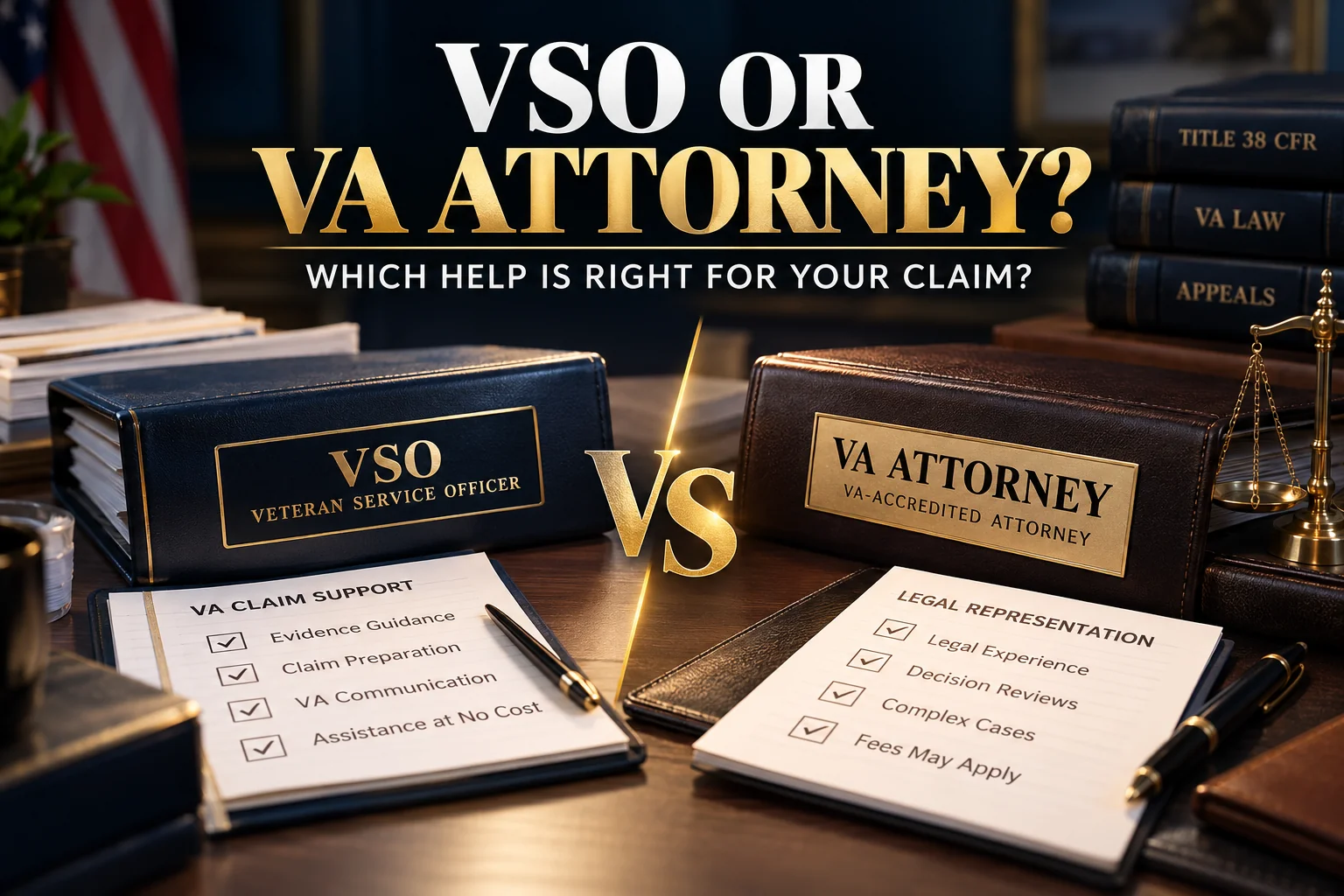
Veterans navigating a VA disability claim may wonder whether they should work with a free Veteran Service Officer (VSO) or hire a VA-accredited attorney.
Both can provide valuable assistance, but they may offer different experience, services, and approaches depending on the representative and the veteran’s circumstances.
Does paying an attorney mean better results? Are VSOs only useful for initial claims? Can a veteran change representatives while a claim is pending?
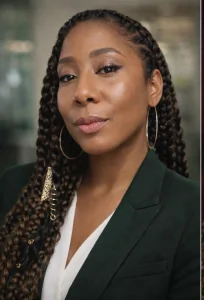
In this conversation, Leah Bucholz, founder and CEO of Prestige Veteran Medical Consulting, speaks with Ray Herrera, Veteran Service Officer for Wilson County, Texas, about the differences between VSO assistance and attorney representation.
Ray, a Navy veteran who has worked with veterans since 2013 and served as a Veteran Service Officer since 2019, shares his perspective on fees, appeals, professional experience, communication, and the questions veterans should consider before choosing representation.
The central message is that neither a VSO nor an attorney is automatically the best choice for every veteran. The right fit depends on the individual’s needs and the services the representative can provide.

Table of Contents
What Is the Difference Between a VSO and a VA-Accredited Attorney?
The first topic Leah and Ray discuss is the difference between a Veteran Service Officer and a VA-accredited attorney.
Both types of accredited representatives may assist veterans with VA benefits claims, but their professional backgrounds, services, and fee arrangements can differ.
In common conversation, the term VSO may refer to a Veteran Service Officer or a Veterans Service Organization. For formal VA representation, it is important to confirm that the individual is appropriately accredited or working within an authorized VA-recognized organization.
An accredited VSO representative may assist with collecting records, preparing claims, understanding correspondence, and requesting decision reviews.
A VA-accredited attorney may provide many of those services while also bringing legal training to questions involving statutes, regulations, appeals, and complex legal arguments.
Ray explains that the decision should not be based solely on someone’s professional title.
Instead, veterans should consider the representative’s background, experience, and ability to address the particular issue.
VA recognizes three categories of accredited representatives: VSO representatives, attorneys, and claims agents.
Official resource: Get Help From a VA-Accredited Representative
Free VSO Assistance vs. Attorney Fees: What Should Veterans Know?
Cost is one of the clearest differences discussed in the interview.
Ray explains that accredited VSO representatives provide their VA claim representation services free of charge.
VA confirms that accredited VSO representatives do not charge veterans for assistance with VA benefit claims.
VA-accredited attorneys and claims agents may charge fees under certain circumstances.
However, an important distinction applies:
Attorneys and claims agents generally cannot charge for services provided before VA issues its initial decision on the claim.
Some accredited attorneys assist with initial claims without charging a fee. Others primarily accept cases after an initial decision, when fees may be permitted under VA’s rules.
For fee-based representation, veterans should understand the written agreement, the payment terms, and the circumstances under which a fee may become payable.
An attorney charging an authorized fee does not automatically provide a better service than a free VSO representative.
Likewise, free representation is not automatically less experienced or less valuable.
The cost arrangement is one factor in choosing assistance, not a measure of the representative’s competence.
Official resource: VA Accredited Representative FAQs
First VA Claim or Appeal: Which Representative May Be More Appropriate?
Leah and Ray discuss how representation needs can change depending on where a veteran is in the claims process.
For an initial claim, a veteran may need assistance understanding required forms, obtaining relevant documents, organizing information, and communicating with VA.
Accredited VSO representatives commonly provide these services.
An attorney may also assist with an initial claim, although applicable VA rules generally prohibit charging a fee for that initial-claim assistance.
When a veteran receives an unfavorable decision, other questions may become relevant.
These can involve understanding the reasons for the decision, identifying the legal issues in dispute, interpreting regulations, or determining which decision-review process is appropriate.
Ray explains that attorneys often work extensively with these legal questions, including issues involving Title 38 of the Code of Federal Regulations (38 CFR) and VA’s adjudication procedures.
However, experienced VSO representatives may also assist with decision reviews and appeals.
The distinction is not that VSOs handle initial claims while attorneys exclusively handle appeals.
Both may provide useful assistance at different stages.
The more important question is whether the individual representative has relevant experience with the type of matter being considered.
Does Hiring a VA Attorney Guarantee Better Results?
This is one of the interview’s most important questions.
Leah asks Ray whether an attorney generally achieves better outcomes than a VSO.
Ray does not suggest that one professional title guarantees better results.
Instead, he emphasizes experience.
A newly accredited attorney may have substantial legal education but limited experience handling VA disability claims.
An experienced VSO may have worked with veterans for many years and developed extensive knowledge of records, VA procedures, and common claim issues.
The reverse may also be true.
An experienced VA-accredited attorney may have specialized knowledge relevant to a particular legal disagreement or complicated appeal.
Ray’s point is that experience should be evaluated in context.
Questions worth considering include:
- How long has the representative worked with VA benefits matters?
- What types of claims or decision reviews do they regularly handle?
- Are they familiar with the issues involved in the veteran’s situation?
- Can they explain their services and limitations clearly?
- Do they have the availability to provide the assistance needed?
No representative can guarantee a favorable VA decision.
The goal is to find qualified assistance appropriate to the veteran’s circumstances.
Can Hiring an Attorney Make a VA Claim Move Faster?
Veterans may also wonder whether hiring an attorney will accelerate VA’s processing of a claim.
Ray explains that a representative can help prepare and submit information, but VA still has its own procedures for reviewing and deciding claims.
An attorney’s involvement does not automatically bypass those procedures.
The same is true for VSO representation.
The representative may help the veteran understand requests, clarify documentation questions, and navigate the relevant process.
However, neither type of representative can promise a particular processing timeline.
The nature of the claim, available evidence, required development, and VA’s workload can all affect the process.
Veterans should be cautious about choosing representation solely because someone promises a faster decision.
The more useful consideration is whether the representative can explain what services they will provide and what parts of the process remain outside their control.
When Might an Attorney’s Legal Experience Be Particularly Relevant?
Ray describes situations where detailed knowledge of VA law and procedures may be especially valuable.
For example, a veteran may be dealing with an unfavorable decision involving a complicated regulatory question.
There may be disagreement about how a provision applies, what evidence was considered, or what issue needs to be addressed through decision review.
Attorneys who regularly handle VA benefits matters may have experience interpreting legal requirements, preparing arguments, and working within the available review processes.
However, Ray also emphasizes that VSOs are not necessarily unfamiliar with these areas.
Some VSO representatives have extensive experience assisting veterans with complex claims and appeals.
A veteran should therefore consider the particular representative’s experience rather than assume that an attorney will always be more knowledgeable.
The appropriate type of assistance depends on the specific questions involved – not simply the complexity implied by a professional title.
Can Veterans Switch From a VSO to an Attorney or Another Representative?
Leah asks Ray what veterans should consider if they are unhappy with their current representation.
Ray describes his preference for avoiding unnecessary confusion while matters are pending.
In some situations, he encourages veterans to consider waiting until a pending issue is resolved before changing representatives.
He also discusses the importance of communication between the veteran, the current representative, and any incoming representative.
However, waiting for a pending claim to be decided is not a universal VA requirement.
VA states that veterans can discharge an accredited representative or appoint a new accredited representative to replace the current one.
The decision to change representation may involve practical considerations, including whether deadlines are approaching, what work has already been completed, and whether a fee agreement exists.
If an attorney or claims agent has a fee agreement, ending that relationship may also raise questions about fees for prior work.
These issues should be reviewed carefully rather than assuming that switching representatives automatically cancels every existing obligation.
Veterans considering a change should understand their current representation arrangement and communicate clearly with the professionals involved.
Official resource: VA Guidance on Changing Representatives
Can a VSO and an Attorney Work Together?
Another interesting part of the interview concerns professional collaboration.
Ray explains that he has communicated with attorneys about questions involving documents or VA correspondence.
He describes this as a form of professional cooperation intended to clarify an issue or provide another perspective.
He also mentions having professional contacts he can consult when a situation calls for additional experience.
Leah relates this to healthcare, where medical professionals sometimes consult colleagues when reviewing complex clinical questions.
The broader lesson is that no professional necessarily knows everything.
However, informal professional consultation and formal VA representation are different arrangements.
VA generally recognizes the appointed representative or organization as the representative of record. Appointing a new representative ordinarily replaces the existing appointment.
A VSO and an attorney may communicate or exchange professional insight when appropriate, but that does not mean they are automatically both appointed to represent the veteran on the same matter.
Appropriate authorization, confidentiality, and professional responsibilities remain important.
Ray also makes clear that he does not support arrangements in which a VSO performs all the preparation simply to hand that work over to another representative as a routine practice.
His emphasis is on professional cooperation that serves a legitimate purpose for the veteran.
Why Experience Matters More Than Professional Titles
Throughout the interview, Ray returns to the importance of relevant experience.
He explains that VA benefits representation involves specialized procedures and records that professionals learn to navigate through training and repeated practice.
An attorney’s law degree is an important qualification, but it does not necessarily establish the same level of practical VA benefits experience as someone who has worked extensively in that field.
Likewise, years of experience alone do not guarantee that a representative is familiar with every type of issue.
Leah compares this to medical practice.
A clinician’s credentials matter, but the provider’s training, relevant experience, and ability to address the particular medical question also matter.
The same principle can help veterans evaluate representation.
Rather than asking only whether someone is an attorney or a VSO, consider whether they regularly handle the kinds of questions involved in the veteran’s circumstances.
Relevant experience, sound judgment, and clear communication are more useful indicators than a professional title alone.
What Questions Should Veterans Ask Before Choosing a Representative?
In the later part of the conversation, Leah asks Ray what veterans should discuss before choosing a VSO or attorney.
Ray highlights professional experience and the types of cases the representative regularly handles.
Leah adds another important consideration: communication expectations.
A veteran may want regular updates, while another may prefer communication only when an important development occurs.
Different offices have different workloads, appointment procedures, and communication systems.
A representative may provide excellent service while operating within a clearly defined communication schedule.
The important thing is understanding those expectations before establishing the relationship.
Veterans can use the following questions as a general conversation guide:
- Are you currently accredited by VA?
- What experience do you have with matters similar to mine?
- What services will you provide, and are there limitations?
- Are there fees, and when could they become payable?
- How will we communicate about updates or questions?
- Who will be my primary point of contact?
- How do you approach situations requiring additional expertise?
- What happens if I decide to change representatives later?
Ray also discusses success rates, but he cautions that an overall percentage does not tell the whole story.
Different representatives work with different cases, and the outcome is not determined by the representative alone.
A meaningful discussion should focus on relevant experience and the services available rather than treating a success-rate claim as a guarantee.
How Can Veterans Verify VA Accreditation?
Before appointing a representative, veterans should confirm the person’s professional authorization.
VA accredits qualified VSO representatives, attorneys, and claims agents to assist with the preparation, presentation, and prosecution of VA benefits claims.
Not every individual advertising assistance with VA claims is necessarily accredited.
VA provides an official tool to help veterans find accredited representatives.
Official resource: Find a VA-Accredited Representative
VA also provides appointment forms for different types of representatives.
VA Form 21-22 is generally used to appoint a recognized Veterans Service Organization.
VA Form 21-22a is used to appoint an individual, such as a VA-accredited attorney or claims agent.
These appointments identify who is authorized to represent the claimant in the relevant VA benefits matter.
Veterans should verify accreditation and understand the representation arrangement before signing documents or agreeing to fees.
Where Does Medical Evidence Fit Into This Discussion?
Although this interview focuses on choosing representation, Leah also emphasizes the distinction between legal representation and professional medical analysis.
A VA-accredited representative may help a veteran understand the claim process, interpret a decision, or address legal and procedural questions.
A medical professional has a different responsibility.
Medical professionals evaluate clinical information, diagnoses, symptoms, medical history, possible causation, aggravation, and other relevant medical questions.
An Independent Medical Opinion, sometimes called a Nexus letter, may address whether the available evidence medically supports a proposed relationship between conditions or between a current disability and military service.
That medical opinion does not determine entitlement to VA benefits.
The clinician provides medical analysis, while VA adjudicators make the benefits decision.
An attorney or VSO may consider how medical evidence relates to a claim, but the actual medical conclusions should remain grounded in independent professional judgment.
At Prestige Veteran Medical Consulting, this separation is fundamental to the services we provide.
Final Thoughts: Is a Free VSO or VA Attorney the Better Choice?
The interview does not identify one universal winner.
Instead, Leah and Ray emphasize that veterans should consider their needs, the representative’s experience, affordability, and communication expectations.
An accredited VSO may offer extensive experience and valuable assistance without charging for VA claim representation.
A VA-accredited attorney may provide legal experience relevant to complex questions or decision reviews, subject to applicable fee rules.
But neither type of representative can guarantee a better outcome simply because of their professional title.
The better question is not necessarily “Which profession is better?”
It is:
“Which qualified representative has the experience, services, and approach that fit my situation?”
As Ray explains, choosing representation should begin with understanding what help is needed and whether the person or organization can provide it.
Also Read:
Free VA Claim Guidance: What Veterans Should Know About Working With a VSO
VA Claim Mistakes: A VSO Explains What Veterans Often Miss
At Prestige Veteran Medical Consulting, a veteran-owned company, we specialize in Independent Medical Opinions (IMOs) known as Nexus letters.
Our purpose is to empower YOU, the veteran, to take charge of your medical evidence and provide you with valuable educational tools and research to guide you on your journey.
Understanding the unique challenges veterans face, our commitment lies in delivering exceptional service and support.
Leveraging an extensive network of licensed independent medical professionals, all well-versed in the medical professional aspects of the VA claims process, we review the necessary medical evidence to incorporate in our reports related to your VA Disability Claim.
Prestige Veteran Medical Consulting is not a law firm, accredited claims agent, or affiliated with the Veterans Administration or Veterans Services Organizations. However, we are happy to discuss your case with your accredited VA legal professional.