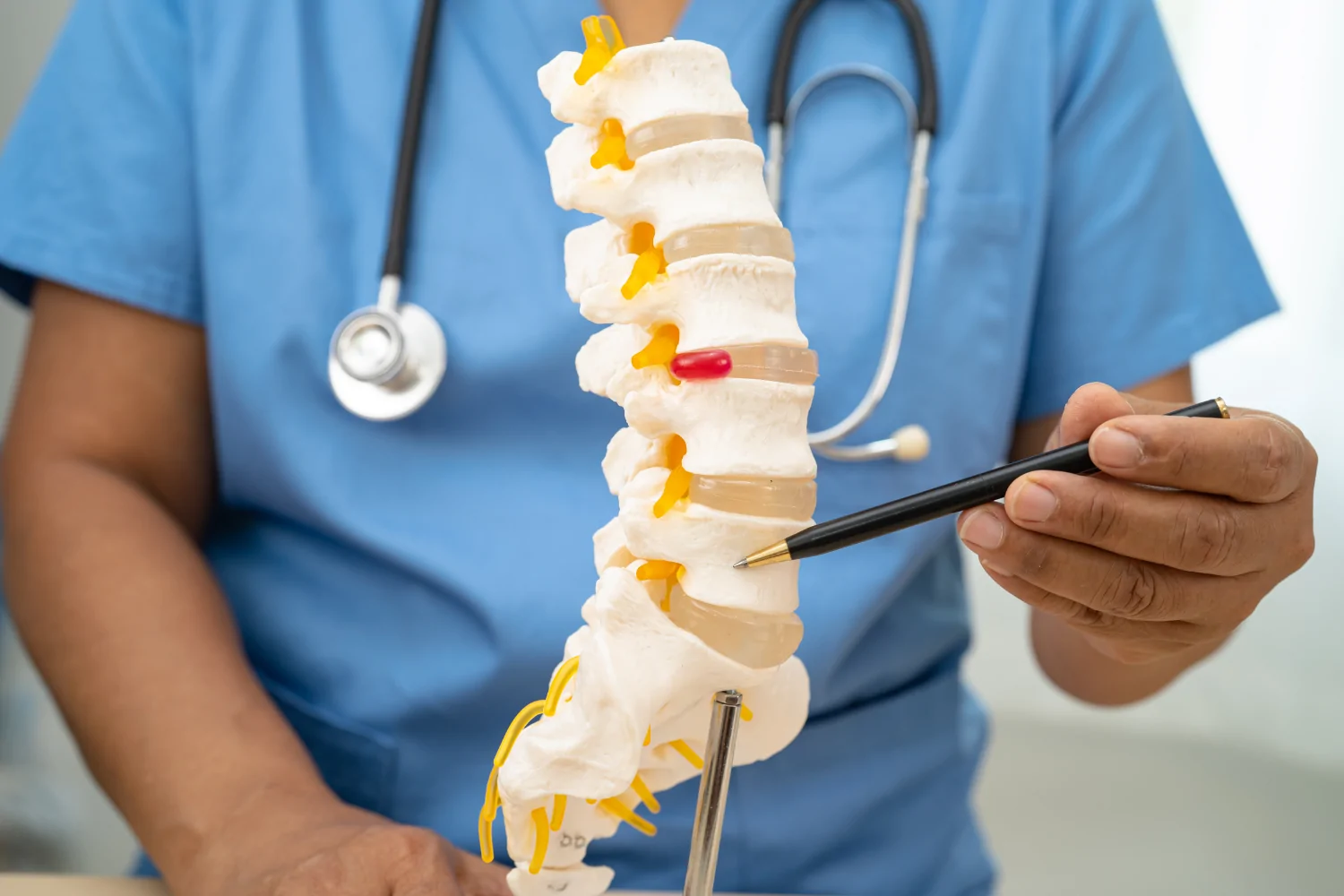
VA Disability Rating for Degenerative Disc Disease
How the VA rates degenerative disc disease under DC 5242, when IVDS applies, separate nerve ratings, C&P exam tips, and the evidence that supports a DDD claim.

How the VA rates degenerative disc disease under DC 5242, when IVDS applies, separate nerve ratings, C&P exam tips, and the evidence that supports a DDD claim.
The VA’s back rating criteria explained: the spine rating formula, IVDS, separate nerve ratings, flare-ups, painful motion, and the paths to a 100% rating.

Lumbosacral strain ranks among the most prevalent musculoskeletal injuries experienced by U.S. veterans, due to the rigorous physical demands of military service. Understanding how this

Sciatica is a condition many veterans encounter due to the physically demanding and often high-risk nature of military service. Characterized by pain radiating along the

Conditions veterans commonly claim secondary to back pain, including sleep apnea, radiculopathy, depression, hip and knee problems, GERD, and ED, and the evidence each one needs.

Two sample nexus letters for low back pain (direct and secondary to a knee condition), how VA rates the spine under 38 CFR 4.71a, and what a strong opinion must address.

Hip pain is a common issue faced by many veterans, often arising as a secondary condition linked to back pain. Understanding the connection between these

Pilots play a crucial role in the armed forces, undertaking demanding tasks and facing occupational exposures that can impact their health. Leah Bucholz sheds light