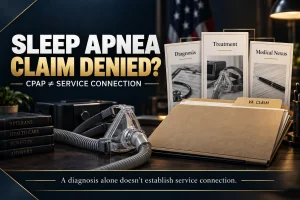


Leah Bucholz delves into the complex relationship between obstructive sleep apnea and allergic rhinitis, shedding light on how these conditions intersect within the context of veterans’ disability. We will discuss the various aspects of sleep apnea in connection with allergic rhinitis, drawing attention to the multifaceted nature of these medical conditions.

Table of Contents
The Link Between Sleep Apnea and Allergic Rhinitis
Many veterans are service-connected for allergic rhinitis, often related to Gulf War exposures, burn pit exposures, or diagnoses during active duty. Later in life, some of these veterans develop sleep apnea, prompting consideration of a potential relationship between the two conditions. Allergic rhinitis, with its nasal airway issues, can contribute to the development of obstructive sleep apnea.
Exploring the Literature: Connecting the Dots
Various studies have discussed the risk factors for obstructive sleep apnea, revealing a notable two-fold increase in prevalence compared to controls, independent of the cause of nasal congestion. Additionally, a significant studies delve into the subsequent risk of chronic rhinosinusitis in individuals with obstructive sleep apnea.
Nasal Pathologies and Their Impact on Sleep Apnea
Leah discusses an Italian publication from 2019, “Nasal Pathologies in Patients with Obstructive Sleep Apnea” which emphasizes how nasal obstruction caused by issues such as deviated septum, inferior turbinate hypertrophy, chronic rhinosinusitis, and chronic nasal inflammation can contribute to or cause obstructive sleep apnea. Mucosal inflammation, swelling, and upper airway patency impairment are all factors that may play a role in the development of sleep apnea.
Multiple Factors at Play
Sleep apnea has a multifactorial nature and it is imperative to understand the importance of considering various factors when considering a relationship between conditions for those seeking service connection. Whether it’s PTSD, weight gain, orthopedic issues, allergic rhinitis, chronic sinusitis, deviated septum, or the development of the condition during service, all these elements should be thoroughly examined.
Literature Recommendations for Veterans
For veterans seeking to reinforce their disability claims, Leah recommends reviewing the literature. Articles like “The Linkage of Allergic Rhinitis and Obstruction of Sleep Apnea” (Asian Pacific Journal of Allergy and Immunology, 2014) and up-to-date resources can be valuable tools. By familiarizing themselves with the literature, veterans can empower themselves to discuss these findings with their healthcare providers and potentially strengthen their claims.
Conclusion
Leah’s exploration of the relationship between obstructive sleep apnea and allergic rhinitis offers valuable insights for veterans navigating the complexities of disability claims. As the understanding of these conditions evolves, veterans are encouraged to engage with the literature, consult with their healthcare providers, and present a comprehensive picture of their medical history when seeking service connections for sleep apnea. In doing so, veterans can enhance their chances of receiving the support and recognition they deserve for the challenges they face.
Also read: Veterans Disability & Buddy Statements
At Prestige Veteran Medical Consulting, a veteran-owned company, we specialize in Independent Medical Opinions (IMOs) known as Nexus letters.
Our purpose is to empower YOU, the veteran, to take charge of your medical evidence and provide you with valuable educational tools and research to guide you on your journey.
Understanding the unique challenges veterans face, our commitment lies in delivering exceptional service and support.
Leveraging an extensive network of licensed independent medical professionals, all well-versed in the medical professional aspects of the VA claims process, we review the necessary medical evidence to incorporate in our reports related to your VA Disability Claim.
Prestige Veteran Medical Consulting is not a law firm, accredited claims agent, or affiliated with the Veterans Administration or Veterans Services Organizations. However, we are happy to discuss your case with your accredited VA legal professional.