
Hearing loss is a prevalent issue among veterans, and its impact on their lives can be profound. In this article, we will explore the connection between hearing loss and veterans disability, examining key factors such as the VA’s Duty Noise Exposure Level Chart, research articles on the subject, and the complexities involved for those claiming disability benefits for hearing-related issues.

Table of Contents
Understanding the VA’s Duty Noise Exposure Level Chart
Leah Bucholz sheds light on the military’s duty noise exposure levels. The VA has developed a comprehensive chart categorizing different Military Occupational Specialties (MOS) based on their probability of noise exposure. This chart serves as a guideline, indicating the likelihood of individuals within specific occupations experiencing varying levels of noise exposure.
MOS Categories
The chart encompasses various branches of the military, including Army enlisted and officer, Navy enlisted and officer, Marine Corps, Air Force, and more. Within each branch, MOS categories are further classified into highly probable, moderate, and low probability of noise exposure.
For example, an 11B (Infantryman) in the Army enlisted category may fall under the highly probable noise exposure level, signifying that individuals in this MOS are inherently exposed to high levels of noise. However, it’s crucial to recognize that even occupations classified as low probability may still involve significant noise exposure, as individual circumstances and duties can vary widely.
Veterans can navigate this chart to understand the potential impact of noise exposure on their hearing health, considering both their MOS and any additional duties they performed during service.
Research Articles on Hearing Loss in the Military
To support the connection between military service and hearing loss, several research articles offer valuable insights. One such article, “Impact of Noise on Hearing in the Military,” published in the Military Medical Research journal in February 2015, reveals that military personnel often face chronic exposure to loud noises exceeding 90 decibels (DB). This level surpasses the commonly associated threshold of 85 DB for hearing loss and tinnitus.
The article discusses various hearing symptoms resulting from noise exposure, including temporary threshold shifts, idus hyperacusis, recruitment distortion, and abnormal pitch perception. It further explores the pathophysiology of hearing loss, distinguishing between high-level, short-duration exposures and long-term exposures to low-level noise, both of which can damage the auditory system.
Another research article, “Adding Insult to Injury: Cochlear Nerve Degeneration After Temporary Noise-Induced Hearing Loss,” published in the Journal of Neuroscience, highlights the neurological consequences of noise-induced hearing loss. Understanding these physiological aspects is crucial for veterans seeking to establish a connection between their service-related noise exposure and subsequent hearing issues.
Temporary and Permanent Threshold Shifts
A common point of contention in disability claims is the distinction between temporary and permanent threshold shifts. Some examiners may focus solely on permanent shifts, potentially overlooking the significance of temporary shifts in causing long-term damage to the auditory system.
The article, “Temporary and Permanent Noise-Induced Threshold Shifts: A Review of Basic and Clinical Observations” (2016), delves into this distinction. It emphasizes that temporary threshold shifts can contribute to lasting damage, challenging the misconception that only permanent shifts should be considered in disability assessments.
Delayed Onset Hearing Loss
Another critical aspect to consider is delayed onset hearing loss. Veterans may not immediately experience hearing issues upon leaving service, but they can develop them over time. This delayed onset adds a layer of complexity to establishing a service connection for hearing-related disabilities.
Veterans should consider the timing and patterns of their hearing loss. While delayed onset is plausible, it becomes more challenging to attribute hearing loss to service if a veteran maintains normal hearing for an extended period post-service. Factors such as post-service occupations involving loud noise exposure should also be taken into account.
VA Rating System and Seeking Professional Guidance
The VA employs specific grids to determine hearing levels and corresponding rating percentages for disability claims. Understanding where one falls within this system requires careful examination and, ideally, consultation with accredited legal professionals.
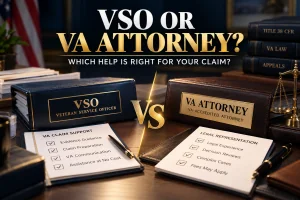
Veterans are encouraged to seek guidance from accredited claims agents or attorneys specializing in veterans’ disability claims. These professionals can provide valuable insights into the intricacies of the VA rating system, increasing the likelihood of a favorable outcome for disability claims.
Conclusion
Hearing loss and veterans disability is a significant concern, and understanding the complexities of VA disability claims related to noise exposure is crucial. The Duty Noise Exposure Level Chart, supported by research articles, highlights the impact of military service on hearing health. Recognizing the importance of both temporary and permanent threshold shifts, along with considering delayed onset hearing loss, enhances veterans’ ability to present compelling cases for disability benefits.
As veterans navigate the intricacies of the VA system, seeking professional guidance becomes a pivotal step. With a comprehensive understanding of the factors at play, veterans can advocate for their well-deserved disability benefits and ensure their hearing-related issues are appropriately recognized and addressed by the VA.
Also read: What Is The AVET Project?
At Prestige Veteran Medical Consulting, a veteran-owned company, we specialize in Independent Medical Opinions (IMOs) known as Nexus letters.
Our purpose is to empower YOU, the veteran, to take charge of your medical evidence and provide you with valuable educational tools and research to guide you on your journey.
Understanding the unique challenges veterans face, our commitment lies in delivering exceptional service and support.
Leveraging an extensive network of licensed independent medical professionals, all well-versed in the medical professional aspects of the VA claims process, we review the necessary medical evidence to incorporate in our reports related to your VA Disability Claim.
Prestige Veteran Medical Consulting is not a law firm, accredited claims agent, or affiliated with the Veterans Administration or Veterans Services Organizations. However, we are happy to discuss your case with your accredited VA legal professional.