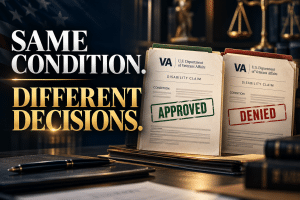


There is an intricate relationship between Multiple Sclerosis and Veterans Disability. Many veterans grapple with this condition, either having already established service connection or actively pursuing it. The complexities arise from diagnoses during or after service, potential exposure on active duty, or the onset of symptoms that only manifest years later. Let’s explore the nuances of MS, its impact on veterans, and the essential factors in securing VA disability benefits.

Table of Contents
Understanding Multiple Sclerosis
Before delving into the intricacies of disability claims, it’s crucial to grasp some fundamental facts about MS. According to the Mayo Clinic, nearly one million adults in the US are living with MS, which more commonly affects women than men. Diagnosis typically occurs between the ages of 20 and 40. MS is an autoimmune disease where the body’s immune system attacks the myelin, a protective sheath around nerves in the brain and spinal cord. This damage disrupts nerve signals, leading to symptoms affecting the brain, spinal cord, and eyes.
There are four main types of MS:
- Clinically Isolated Syndrome (CIS): The first episode of MS symptoms, often categorized as CIS. Not everyone with CIS develops MS.
- Relapsing Remitting MS: The most common form, characterized by flare-ups and periods of remission.
- Primary Progressive MS: Symptoms gradually worsen without periods of relapse or remission.
- Secondary Progressive MS: Initially diagnosed as relapsing remitting MS, progressing to worsening symptoms without remission.
Veterans Disability and MS: Key Factors
When seeking disability benefits for MS, certain factors must be considered:
- Diagnosis: A current diagnosis of MS.
- In-service Event or Illness: There must be a link between an in-service occurrence and the current MS diagnosis.
- Nexus: Establishing a connection between the in-service event and the current diagnosis.
Presumptive Criteria
A significant aspect is the presumptive criteria. If diagnosed within seven years of exiting service to a 10% compensable degree, it is considered presumptive. This recognizes the delayed onset of symptoms, acknowledging that diagnosis may take years.
Even if diagnosed a decade later, specific medical records pointing to symptoms during service can strengthen a connection. Falls, vision abnormalities, or other documented issues, if linked to MS, can be crucial.
While pursuing a claim, consulting with a legal professional, such as a Veterans Service Officer, VA-accredited claims agent or attorney, is advisable for strategic guidance through the claims process.
Multiple Sclerosis Centers of Excellence
Overview
The VA’s Multiple Sclerosis Center of Excellence, established in 2003, aims to enhance understanding, impact, and treatment of MS in veterans. Their mission includes improving healthcare services, expanding care coordination, and providing resources.
Resources for Veterans
The Center offers valuable resources for veterans:
- Symptom Information: Comprehensive details on various MS symptoms.
- Treatment Options: Articles on different treatments and interventions.
- Research and Development: Updates on ongoing research benefiting veterans.
- Veteran Stories: A therapeutic space for veterans to share experiences, providing encouragement and support.
Beyond Disability Compensation
Apart from disability compensation, individuals with MS may be eligible for additional benefits:
- Specialty Adaptive Housing: Modifications for homes and vehicles to accommodate mobility needs.
- Prosthetics and Assistive Devices: Resources for those requiring prosthetics or assistive devices.
- Clothing Allowances: Eligibility for allowances if clothing is damaged due to the disability.
- Secondary Conditions: Compensation for secondary conditions like depression related to MS.
- Aid and Attendance: Assistance for caregivers or individuals needing aid in daily activities.
Conclusion
Navigating the intricacies of securing VA disability benefits for MS requires a comprehensive understanding of the disease, the claims process, and available resources. Utilizing the presumptive criteria, gathering compelling medical evidence, and seeking support from the Multiple Sclerosis Centers of Excellence can significantly provide support to veterans seeking assistance. Beyond compensation, exploring additional benefits tailored to the unique challenges posed by MS can enhance the overall quality of life for veterans and their families.
Also read: 11B Infantryman and Veterans Disability
At Prestige Veteran Medical Consulting, a veteran-owned company, we specialize in Independent Medical Opinions (IMOs) known as Nexus letters.
Our purpose is to empower YOU, the veteran, to take charge of your medical evidence and provide you with valuable educational tools and research to guide you on your journey.
Understanding the unique challenges veterans face, our commitment lies in delivering exceptional service and support.
Leveraging an extensive network of licensed independent medical professionals, all well-versed in the medical professional aspects of the VA claims process, we review the necessary medical evidence to incorporate in our reports related to your VA Disability Claim.
Prestige Veteran Medical Consulting is not a law firm, accredited claims agent, or affiliated with the Veterans Administration or Veterans Services Organizations. However, we are happy to discuss your case with your accredited VA legal professional.