


Irritable Bowel Syndrome (IBS) is more than just stomach pain or occasional discomfort. For many veterans, it’s a persistent, life-altering condition that impacts daily routines, work capabilities, and mental health. Thankfully, the Department of Veterans Affairs (VA) recognizes IBS as a disability. If symptoms are service-connected, military veterans may be entitled to compensation under the VA disability rating system.
This guide summarizes IBS VA rating criteria, common secondary claims, and VA.GOV information about disability claims. This article is educational information, not legal advice.
Table of Contents
What Is Irritable Bowel Syndrome (IBS)?
Irritable Bowel Syndrome or IBS is a chronic gastrointestinal disorder that affects the large intestine, leading to symptoms like abdominal cramping, diarrhea, constipation, gas, and bloating. Unlike Inflammatory Bowel Disease (IBD), which causes visible inflammation and damage, IBS is a functional disorder, meaning symptoms exist without detectable structural abnormalities. Yet, that doesn’t make it any less disruptive.
There are mainly three types of IBS, each classified based on the predominant stool pattern:
- IBS with constipation (IBS-C)
- IBS with diarrhea (IBS-D)
- IBS with mixed bowel habits (IBS-M)
What Causes IBS in Military Veterans?
Veterans, especially those exposed to service-related factors like stress, trauma, or poor nutrition during service, are disproportionately affected. Military duties often entail consuming foreign foods, enduring high-stress environments, and being exposed to infections, all of which are common IBS triggers.
According to the VBA Annual Benefits Report for fiscal year 2025, 357,156 veterans received compensation for IBS, making it the second most common service-connected digestive condition.
IBS is a functional gastrointestinal disorder recognized by VA as a service-connected digestive system condition.
Common IBS Symptoms Experienced:
- Abdominal discomfort or cramping, usually relieved by defecation
- Bloating or distension
- Recurring episodes of diarrhea (IBS-D), constipation (IBS-C), or a mix of both (IBS-M)
- Mucorrhea (mucus in the stool)
- An urgent and unexpected need to have a bowel movement
For many veterans, Irritable Bowel Syndrome is more than a physical issue; it can affect their mental health, employment, social interactions, and overall quality of life. VA disability ratings for IBS reflect the severity of the condition under applicable criteria.
VA Disability Ratings for IBS: Updated Criteria
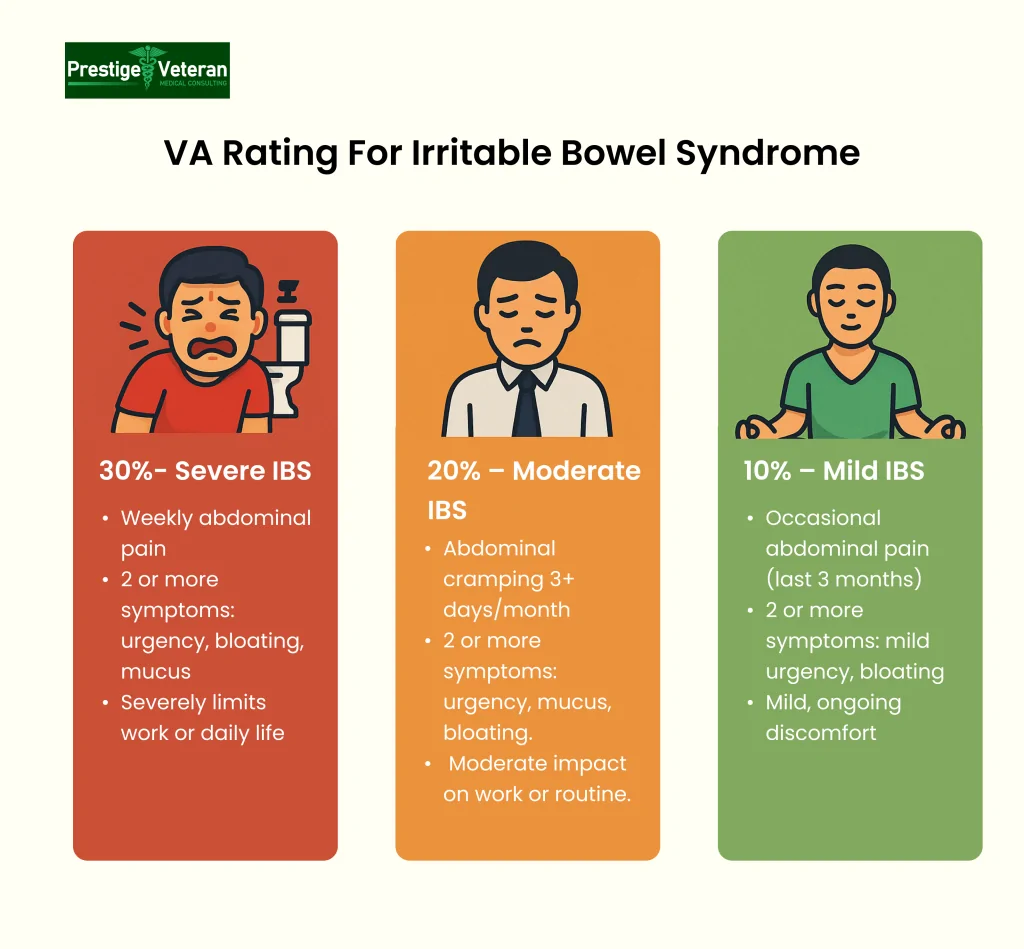
Effective May 19, 2024, the VA’s digestive-system amendments introduced new criteria for evaluating gastrointestinal conditions, including Irritable Bowel Syndrome. The updated criteria rate IBS based on symptom frequency and severity.
Previously, VA disability ratings for IBS were limited to 0%, 10%, or 30%. Under the revised rules, IBS ratings under Diagnostic Code 7319, part of 38 CFR § 4.114, include 10%, 20%, and 30% levels. Each of these rating levels is compensable.
Breakdown of VA Rating Criteria for IBS (Diagnostic Code 7319):
30% VA Rating for IBS (Severe)
To qualify:
- Abdominal pain related to defecation at least one day every week during the past three months
- Two or more of the symptoms: changes in stool frequency or form, altered stool passage like straining and/or urgency, mucorrhea, abdominal bloating, or subjective distension
This is the maximum VA rating for IBS. Veterans may report that symptoms interfere with employment or require frequent restroom access.
20% VA Rating for IBS (Moderate)
To qualify:
- Abdominal discomfort or cramping due to bowel movements occurring at least three days each month.
- Experiencing two or more of the digestive symptoms: altered stool frequency or form, changes in stool passage (straining and/or urgency), passage of mucus (mucorrhea), a feeling of abdominal bloating or subjective distension.
10% VA Rating for IBS (Mild)
To qualify:
- Abdominal pain occurring at least once during the previous three months
- Two or more of the additional symptoms: changes in stool frequency or form, straining and/or urgency to defecate, mucorrhea, bloating, or subjective distension
The revised schedule assigns ratings according to symptom frequency and severity. IBS symptoms can vary and may include chronic diarrhea, constipation, bloating, dyspepsia, and mucorrhea.
How Does the VA Rate IBS?
The VA uses a symptom-based approach when evaluating gastrointestinal disorders like IBS. Ratings for IBS VA disability are primarily determined by:
- How frequently you experience abdominal pain or distress
- Whether you have diarrhea, constipation, or both
- Presence of additional symptoms, such as mucus in your stool or abdominal bloating
- The degree to which IBS affects your work, sleep, and social life
Veterans often ask, “How does the VA rate IBS if I also have other digestive conditions like GERD?” Before May 19, 2024, GERD was rated by analogy to hiatal hernia under Diagnostic Code 7346 and could not be combined with IBS under Diagnostic Code 7319. The digestive-system amendments took effect on May 19, 2024, and GERD is now rated under Diagnostic Code 7206 (esophageal stricture). Because DC 7206 is outside the group of digestive diagnostic codes in 38 CFR § 4.114 that cannot be combined, GERD and IBS can now be rated separately.
Establishing Service Connection for IBS
VA disability compensation claims for IBS generally require evidence of a service connection. This means evidence that the condition started during or was aggravated by military service, or that it is associated with another service-connected condition or a qualifying presumption.
There are three primary ways to establish service connection:
1. Direct Service Connection
Evidence for direct service connection generally includes:
- A current diagnosis of irritable bowel syndrome
- Evidence of gastrointestinal issues or triggers during military service
- A medical nexus linking the IBS symptoms and an in-service event, illness, or injury
2. Secondary Service Connection
If IBS results from another service-connected condition, like PTSD, anxiety, or chronic pain, it may be claimed as secondary. IBS as a secondary condition is often linked to the following:
- PTSD
- Generalized anxiety
- Chronic pain (especially with NSAID use)
- Depression
- Migraines
- GERD
For example, a veteran with service-connected anxiety may experience frequent digestive issues, including cramping and irregular bowel movements. If medical evaluation confirms a diagnosis of IBS linked to the anxiety, the condition may be claimed as secondary.
3. Presumptive Service Connection
Some veterans may qualify for presumptive service connection without separately establishing a direct link between their symptoms and military service. The POW presumption applies to individuals who were held as prisoners of war for 30 days or more.
- Gulf War Veterans who were deployed to Southwest Asia
- Individuals who were held as Prisoners of War (POWs) for 30 days or more
The VA considers IBS a functional gastrointestinal disorder under the Gulf War presumption for qualifying veterans. Eligibility is subject to the applicable presumptive criteria.
IBS as a Secondary Condition
Irritable Bowel Syndrome may be associated with other service-connected conditions and may be considered for secondary service connection.
Examples of primary conditions that may be considered in connection with secondary IBS claims include:
Post-Traumatic Stress Disorder (PTSD):
Irritable Bowel Syndrome may be aggravated by PTSD symptoms like stress, flashbacks, or nightmares. A veteran with service-connected PTSD may seek secondary service connection for IBS when supported by medical evidence.
Generalized Anxiety or Depression:
Mental health conditions can impact the gut-brain axis. Anxiety or depression may occur alongside IBS, with psychiatric evaluations providing relevant medical evidence.
Chronic Pain / Orthopedic Injuries:
NSAIDs used for chronic pain (e.g., knee or back issues) can lead to gastrointestinal distress and trigger IBS over time.
Fibromyalgia:
Fibromyalgia in veterans causes widespread pain and fatigue, which may worsen IBS symptoms through physical stress and digestive disruption.
Dyspepsia:
Shared gastrointestinal symptoms like bloating, indigestion, and discomfort may be relevant when considering IBS and chronic dyspepsia.
GERD (Gastroesophageal Reflux Disease):
GERD and IBS often co-exist. Acid reflux, NSAID use, and deployment-related diet changes may contribute to or worsen IBS symptoms like bloating and irregular stool patterns.
Migraine / TBI:
Neurological disorders like migraines or traumatic brain injury can disrupt gut function. IBS may be considered for secondary service connection when medical evidence supports a relationship.
Internal Hemorrhoids:
IBS-related diarrhea or constipation can contribute to hemorrhoids, which may be rated depending on bleeding, thrombosis, or anemia.
Ulcerative Colitis / Gastroenteritis:
While rated separately, inflammatory bowel disease (IBD), like ulcerative colitis and gastroenteritis, shares symptoms with IBS. If linked to service or misdiagnosed, a secondary service connection for IBS may apply.
A separately rated secondary condition is combined under 38 CFR § 4.25.
Evidence and Process for IBS Claims
- Medical records for IBS claims may include a diagnosis, VA or military service records, private doctor records, and specialist reports such as gastroenterology reports and colonoscopies.
- In direct and secondary claims, VA looks for medical evidence addressing whether the condition is “at least as likely as not” related to service.
- Disability claims are filed on VA Form 21-526EZ through VA.gov. Claim evidence may include symptom details, information about the connection to military service, and buddy statements.
- The Intestinal Conditions DBQ and the C&P exam are part of the VA evaluation process.
- Review options after a decision are the Supplemental Claim, Higher-Level Review, and Board Appeal.
C&P Examination for IBS
During a VA disability claim for IBS, the Compensation and Pension (C&P) examination is one source of evidence VA considers when assessing how symptoms affect everyday functioning and determining the applicable disability rating.
The Intestinal Conditions DBQ asks about the frequency of abdominal pain, changes in stool, and related symptoms over the past 12 months.
The examination may also address related conditions such as internal hemorrhoids, GERD, or past bouts of gastroenteritis. VA evaluates diagnosed conditions under the applicable criteria.
Records that may document symptoms and treatment include:
- A daily symptom journal
- Private doctor notes or test results
- Statements from family or coworkers about how Irritable Bowel Syndrome affects a veteran’s routine
- Medication lists showing treatment history
VA considers the C&P examination and other evidence when evaluating an IBS disability rating under the applicable criteria.
Presumptive Service Connection for IBS
Certain veterans may qualify for presumptive service connection for IBS, meaning VA presumes the condition is linked to service when the applicable criteria are met.
Who Qualifies?
- Gulf War Veterans: For veterans who served in the Southwest Asia theater on or after August 2, 1990, IBS is a functional gastrointestinal disorder under 38 CFR § 3.317 and must become manifest to a degree of 10% or more by December 31, 2026.
- Former Prisoners of War (POWs): Veterans who were held in captivity for 30 days or longer may qualify for a presumptive service connection for IBS, acknowledging the long-term physical and psychological toll of their imprisonment.
Presumptive claims under § 3.317 do not require a nexus opinion. Direct and secondary claims require evidence linking the condition to service.
Note: The Honoring our PACT Act of 2022 does not currently have updated information on IBS as a presumptive condition.
Can I Be Granted VA Ratings for Both GERD and IBS?
GERD or Gastroesophageal Reflux Disease causes acid to flow back into the esophagus, leading to heartburn, chest pain, and regurgitation. Irritable Bowel Syndrome affects the intestines, often leading to bloating, gas, abdominal pain, and irregular bowel movements. Together, they can create a cycle of digestive distress.
VA also considers the rule against “pyramiding”, which prohibits evaluating the same manifestations more than once.
VA evaluates IBS and GERD under their applicable diagnostic codes and considers whether the symptoms overlap.
How IBS Impacts TDIU Eligibility
IBS may be considered in a Total Disability based on Individual Unemployability (TDIU) determination when its effects are relevant to the veteran’s service-connected disabilities and ability to work.
The schedular threshold for TDIU consideration is:
- At least one service-connected disability rated at 60%, or
- Multiple disabilities with a combined rating of 70% (one of the conditions rated 40% or more)
A 30% IBS rating and 50% service-connected PTSD rating may meet the schedular threshold. Evidence relevant to the effects of a digestive disorder on work may include records of work absences, frequent bathroom trips, canceled events, dietary limitations, or hospital visits.
How VA Evaluates an Increased IBS Rating
For veterans already service-connected for Irritable Bowel Syndrome, VA evaluates evidence about symptom severity and its effects on daily functioning when considering a rating increase.
1. Symptom Logs
Symptom logs may document abdominal pain, urgency, chronic diarrhea, constipation, and effects on work or routines. Records of flare-ups may include the date, time, symptoms, duration, and impact.
2. Medical Records
VA evaluates medical evidence, including treatment records from gastroenterologists or primary care physicians. Notes may document the severity, frequency, and consistency of symptoms.
3. Disability Benefits Questionnaire (DBQ)
The Disability Benefits Questionnaire (DBQ) for intestinal conditions is one source of evidence VA may consider.
4. Related and Secondary Conditions
A separately rated secondary condition is combined under 38 CFR § 4.25.
VA may consider entitlement to TDIU when service-connected disabilities affect a veteran’s ability to work.
5. Compensation and Pension (C&P) Exams
A C&P examination considers the veteran’s reported symptoms and their effects on functioning. The Intestinal Conditions DBQ asks about the frequency of abdominal pain, changes in stool, and related symptoms over the past 12 months.
6. Review Options After a Decision
Review options after a VA decision include a Supplemental Claim, Higher-Level Review, and Board Appeal. The appropriate option depends on the decision and the evidence available.
VA disability ratings for IBS are based on the applicable criteria and evidence in the claim. VA-accredited attorneys and Veterans Service Officers (VSOs) may provide assistance with the claims process.
Conclusion
A VA disability claim for Irritable Bowel Syndrome is evaluated under the applicable rating criteria and service-connection rules. Evidence about symptoms and their effects on daily life may be relevant. Presumptive claims under 38 CFR § 3.317 do not require a nexus opinion; direct and secondary claims require evidence linking the condition to service.
VSOs and VA-accredited representatives may provide assistance with the disability claims process.
FAQs
What VA ratings are available for IBS?
IBS ratings may be 10%, 20%, or 30%, depending on symptom frequency, severity, and effects on daily functioning.
What evidence does VA consider for IBS?
A current diagnosis and evidence about symptoms are relevant. For direct and secondary claims, VA looks for evidence linking the condition to service. Presumptive claims under 38 CFR § 3.317 do not require a nexus opinion.
Is IBS presumptive for VA disability?
Eligible Gulf War veterans and former Prisoners of War may qualify for presumptive service connection for IBS under the applicable criteria.
Do presumptive IBS claims require a nexus opinion?
No. Presumptive claims under § 3.317 do not require a nexus opinion.
How much VA compensation does a veteran receive for IBS?
A single veteran with no dependents receives $180.42 per month for a 10% IBS VA rating, $356.66 for a 20% rating, and $552.47 per month for a 30% rating in 2026. Rates with dependents appear in the 2026 VA disability pay chart.
Also read: Veterans Disability Rating for IBS at the 30% Level
Prestige Veteran Medical Consulting provides independent medical opinions (IMOs), sometimes called nexus letters.
Prestige Veteran Medical Consulting publishes educational information about VA disability criteria and educational tools. Prestige is not a law firm or VA-accredited claims agent, and this article is not legal advice.